The Suit of Cups in Tarot: Card Meanings and Combinations
Cups in Tarot: The Element of Feelings and the Path to Yourself
Tarot cups. When we draw cards from the suit of Cups, we enter a space where logic does not rule — emotions do. This is the most "human" suit in Tarot: it speaks of love, friendship, intuition, creativity — everything that makes life warm and alive. But Cups are not only romance and joy. They are also our fears, attachments, and illusions. Understanding them means understanding yourself better.
In classical tradition, Cups correspond to the element of Water. Water is fluidity, the ability to penetrate the deepest layers of the soul. It remembers everything that has happened to us and reflects what we hide even from ourselves. Therefore, Cups in readings often point to what is happening in our relationships, our emotional state, and what we truly want.
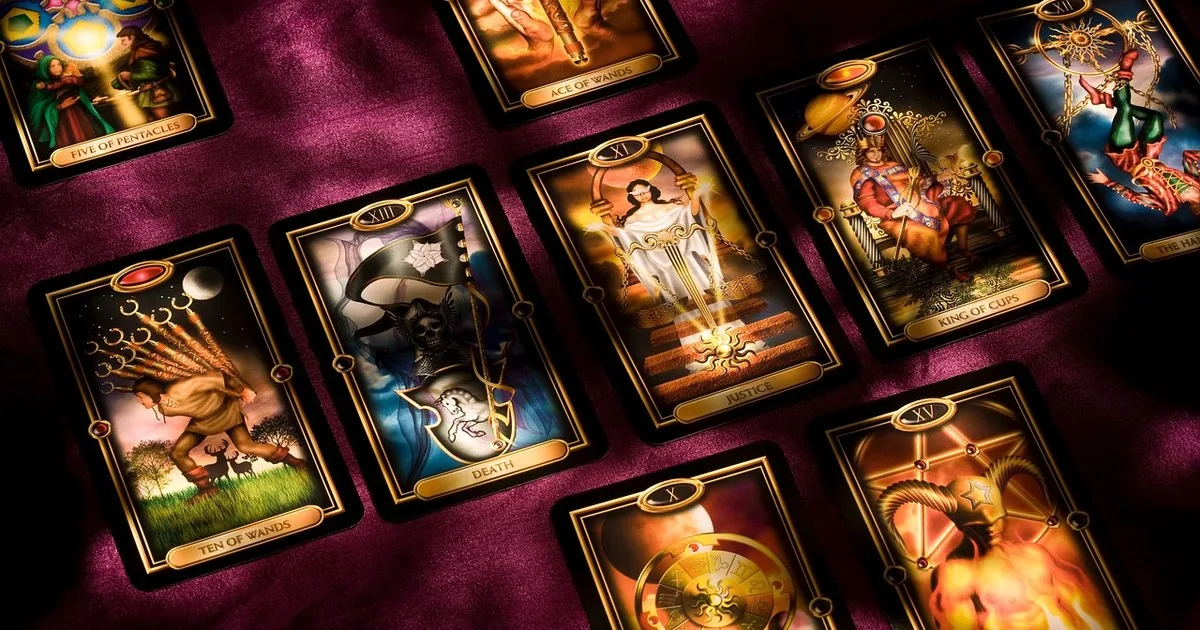
In this article, we will examine each card of the suit of Cups — from the Ace to the King — as well as their combinations with other cards. You will learn how to interpret Cups in different contexts and how to apply this knowledge in everyday life. No mysticism of the "chosen ones" — only practice, tradition, and common sense.
Ace of Cups: The Source of Feelings and New Opportunities
The Ace of Cups is a spring of emotions. It symbolizes the beginning of love, inspiration, and creative flow. When it appears in a reading, the world seems to offer us a cup filled to the brim. It is an invitation to open up to new experiences and allow yourself to feel.
But every gift has a flip side: if we are not ready to receive, the cup may spill. The Ace of Cups often indicates that fate gives us a chance, but it is realized only through our openness. For example, in relationships, it can mean a new acquaintance that will grow into something more if we do not withdraw into ourselves.
Practical step: if the Ace of Cups has appeared to you, reflect on where you are closed to new feelings. Perhaps you are afraid to trust a person or do not allow yourself to dream? Take a small action toward what brings you joy: write a letter, sign up for dance classes, call an old friend. It is important to create space in life for "new water."
In combination with other cards, the Ace of Cups amplifies their emotional aspect. For example, with a Wand — it is passion, with a Pentacle — sensual stability, with a Sword — clarity through emotions. But always remember: the Ace is potential, not a guarantee. It requires your participation.
Two of Cups: Partnership and Reciprocity
The Two of Cups is a card of encounter. It is not just love, but precisely mutual exchange: two people look at each other, hold cups, and promise to share joy and sorrow. In classical tradition, it symbolizes union, friendship, and cooperation where both sides are equal.
In the modern world, the Two of Cups can indicate a business partnership, a creative tandem, or deep friendship. Importantly, this is not a hierarchy but a relationship of equals. If the Two appears in a question about conflict, it advises seeking compromise and restoring connection based on mutual respect.
Example from life: you quarreled with a loved one. The Two of Cups says that the cause of the quarrel is not a lack of love but a disrupted balance. Perhaps one of you gave more than received. Practical advice: sit down and honestly discuss what each person expects from the relationship. Make a list of "exchanges": what you are ready to give and what you want to receive. This will help balance the cups.
In combination with other cards, the Two of Cups softens negative influences. For example, with the Tower, it speaks of a crisis that can be overcome if the connection is preserved; with the Moon, of hidden motives in relationships that should be clarified.
Three of Cups: Celebration and Community
The Three of Cups is a card of joy, friendship, and celebration. Three women in wreaths raising cups symbolize unity, support, and merriment. This is not just a party but a feeling of belonging to a group where you are accepted as you are.
On a practical level, the Three of Cups advises not to isolate yourself in solitude. If you have not seen friends for a long time, if you feel life has become gray — organize a gathering. A shared meal, a trip to nature, or even an online meeting can bring back the taste for life.
But the Three also has a shadow side: sometimes it points to superficiality, to the fact that we "celebrate" to drown out inner emptiness. If the Three appears at a moment when you do not feel joy, ask yourself: are you trying to replace genuine feelings with external activity?
In combination with Pentacles, the Three often means financial success that you want to share with loved ones. With Cups, it amplifies emotional closeness; with Swords, it may indicate a "party with subtext" where tension exists.
Four of Cups: Apathy and Reassessment
The Four of Cups is a card of dissatisfaction and boredom. In it, a person sits under a tree and looks at three cups before them but does not see them. It seems to them that the world offers nothing new, although a fourth cup, offered by a heavenly hand, stands nearby.
This state is familiar to everyone: when we are tired, disappointed, when familiar joys no longer bring pleasure. The Four of Cups is not a verdict but an invitation to reset. It says: "Step away from automatism, look at what you are missing."
Practical step: if you feel apathy, take a pause. Do not try to force yourself to be happy. Instead, engage in routine but with full presence: wash the dishes, go for a walk, just breathe. Often the answer comes when we stop searching.
In combination with other cards, the Four of Cups can indicate missed opportunities. For example, with the Ace of Cups, it says a chance is nearby but you do not notice it. With the Hermit — a time of solitude to hear yourself.
Five of Cups: Bitterness and the Path to Healing
The Five of Cups is a card of loss and regret. In it, a person in a black cloak looks at three overturned cups from which wine spills. Behind them stand two full cups, but they do not see them. This is a symbol of how we fixate on loss, forgetting what remains.
In life, the Five of Cups appears when we experience a breakup, a layoff, the death of a loved one. It allows us to grieve — this is natural. But it also reminds us: grief is not eternal. Healing begins when we turn toward what remains.
Practical advice: if the Five has appeared to you, allow yourself to cry, but then make a list of "remaining cups": people, skills, opportunities that you have. Gradually, the focus will shift from loss to resources.
In combination with healing cards such as the Star or the Sun, the Five of Cups indicates that light will come after the dark streak. With the Moon, it warns of self-deception: perhaps you are clinging to a past that cannot be returned.
Six of Cups: Nostalgia and Purity
The Six of Cups is a card of memories and simple joys. In it, two children are surrounded by cups with flowers. This is an image of innocence, warmth, and family. It speaks of times when life was simpler and safer.
In readings, the Six often points to the influence of the past: old connections, a return to roots, meetings with people from childhood. It can mean that you will receive news from an old friend or return to places where you were once happy.
But the Six also carries a warning: do not live only in the past. If you "remember" too often, you may miss the present. Practical step: find a way to bring a piece of that carefree spirit into today's life — for example, watch a favorite cartoon or bake a pie using your grandmother's recipe.
In combination with the Wheel of Fortune, the Six of Cups speaks of a karmic meeting with a person from the past. With the Devil, it may indicate an unhealthy attachment to old grievances.
Seven of Cups: Illusions and Choice
The Seven of Cups is a card of fantasies and temptations. In it, a person sees seven cups from which strange images rise: jewels, a castle, a dragon. This is a symbol of how our mind creates illusions that promise happiness but have no foundation.
The Seven of Cups often appears when we face a choice and do not know which path is correct. It warns: all that glitters is not gold. Many options are merely mirages created by fear or desire.
Practical step: if the Seven has appeared to you, write down all your "wants" on paper. Then, for each one, ask: "Is this based on reality or fantasy?" Mark those that have practical steps for realization. Discard the rest — they only scatter energy.
In combination with other cards, the Seven of Cups amplifies uncertainty. With the Three of Swords, it speaks of a painful choice; with Temperance, of the need to find balance between the real and the desired.
Eight of Cups: Departure and the Search for Depth
The Eight of Cups is a card of leaving the familiar. In it, a person walks away from eight cups that stand neatly but are empty. They leave them to go into the mountains. This is a symbol of abandoning what no longer brings satisfaction in search of deeper meaning.
In life, the Eight of Cups appears when we realize: the current situation — work, relationships, city — has exhausted itself. We feel an inner call for change, even if outwardly everything is "fine."
Practical advice: if the Eight has appeared to you, do not be afraid to leave what has become empty. This is not running from problems but moving toward yourself. Make a transition plan: what you need to leave (resources, support, time), and start taking small steps.
In combination with other cards, the Eight of Cups can indicate a spiritual search (with the Hermit), a separation (with the Two of Swords), or a new beginning (with the Ace of Wands).
Nine of Cups: Satisfaction and Desire
The Nine of Cups is a card of wish fulfillment. In it, a person sits before nine cups arranged in an arc and looks content. This is an image of satisfaction when you have received what you wanted.
In readings, the Nine of Cups often points to material well-being, recognition, and the fulfillment of a dream. But it also reminds us: true happiness is not in external things but in the ability to rejoice in the simple.
Practical step: if the Nine of Cups has appeared to you, rejoice in your achievements. Celebrate success, thank yourself and others. But also ask: "Is this what I truly need?" Sometimes we reach a goal and then realize it did not bring the expected happiness.
In combination with other cards, the Nine of Cups amplifies positivity. With the Chariot — triumph, with the Empress — fertility and abundance, with the Ten of Pentacles — family happiness.
Ten of Cups: Harmony and Fullness
The Ten of Cups is a card of the ideal family and emotional fullness. In it, happy people stand under a rainbow of ten cups. This is an image of all dreams coming true, love being mutual, and home being filled with warmth.
The Ten of Cups is one of the most favorable cards in a reading. It points to harmony in relationships, support from loved ones, and a sense of belonging. If you are asking about marriage or family — this is a sign that everything is falling into place in the best way.
But do not perceive it as a guarantee of eternal happiness. It is rather a reminder: value what you have and work to preserve this harmony. Practical step: do something good for your loved ones — arrange a family dinner, call your parents, express gratitude.
In combination with other cards, the Ten of Cups amplifies their positive forecast. With the World — complete satisfaction, with the Sun — joy and success.
Page of Cups: Inspiration and Creative Beginnings
The Page of Cups is a card of youth, curiosity, and creative impulses. In it, a young man holds a cup from which a fish peeks out — a symbol of intuition. The Page brings news that touches the heart: a confession of love, a proposal, a creative idea.
On a practical level, the Page of Cups advises being open to new impressions, especially in the sphere of feelings and art. This is a time to listen to intuition, dream, and try yourself in creativity.
But the Page can also indicate immaturity and childish naivety. If you are too trusting, you may be deceived. Practical step: if the Page has appeared to you, give free rein to your imagination, but verify information. Start a small creative project — poetry, drawing, music — not for the result but for pleasure.
In combination with other cards, the Page of Cups can indicate news (with the Ace of Swords), the beginning of a romance (with the Two of Cups), or childhood memories (with the Six of Cups).
Knight of Cups: Romance and Invitation
The Knight of Cups is a card of the romantic hero who rides with a cup, offering his love. He embodies passion, charm, and the ability to speak beautiful words. But he can also be a dreamer who promises more than he delivers.
In readings, the Knight of Cups often points to a proposal, courtship, or creative impulse. If you are single, he may herald a meeting with a person who will conquer your heart. If you are in a relationship — this is a period of romance and closeness.
Practical advice: if the Knight of Cups has appeared to you, allow yourself to be romantic, but do not lose your head. Check whether words match deeds. Take a step toward your feelings — invite someone on a date, confess your sympathy.
In combination with other cards, the Knight of Cups with Pentacles — stable feelings, with Swords — intellectual infatuation, with Wands — a passionate impulse.
Queen of Cups: Depth of Feelings and Intuition
The Queen of Cups is a card of mature emotionality, empathy, and intuition. She sits on a throne, holds a cup, and looks with compassion. This is the archetype of a caring mother, a wise woman who understands the feelings of others.
The Queen of Cups points to the need to listen to your heart and care for loved ones. She can also symbolize a person in your environment who provides emotional support.
Practical step: if the Queen of Cups has appeared to you, devote time to what nourishes your soul: meditation, time in nature, creativity. Also offer support to those who need it — your empathy is especially valuable now.
In combination with other cards, the Queen of Cups with Wands — a passionate and caring woman, with Swords — emotional but judicious, with Pentacles — practical and loving.
King of Cups: Master of Feelings and Wisdom
The King of Cups is a card of emotional maturity and control. He sits on a throne, holds a cup, but does not allow emotions to rule him. This is a symbol of a person who knows how to listen, empathize, yet maintain clarity of thought.
The King of Cups points to the ability to manage your feelings and use them for good. He can also be an advisor or mentor who helps others navigate emotional matters.
Practical step: if the King of Cups has appeared to you, take responsibility for your emotional life. Do not suppress feelings, but do not let them overwhelm you. Practice mindfulness: observe emotions, name them, but do not identify with them.
In combination with other cards, the King of Cups with Wands — an inspiring leader, with Swords — a fair judge, with Pentacles — a generous patron.
Combinations of Cups with Other Suits
Cups rarely appear in a reading alone. Their combinations with other suits give a more complete picture. Understanding these connections will help you read spreads more accurately.
Cups and Wands: fire and water — this is passion, creativity, the movement of feelings. Such combinations point to active emotions, romantic adventures, and inspiration that demands action. For example, Ace of Cups + Ace of Wands — a powerful impulse toward creativity or new love.
Cups and Pentacles: water and earth — these are feelings rooted in reality. Such combinations speak of stable relationships, family well-being, and emotional security. For example, Ten of Cups + Ten of Pentacles — an ideal family, a home full of love and prosperity.
Cups and Swords: water and air — this is a conflict between heart and mind. Such combinations point to emotional difficulties that require analysis, to the need to clearly express your feelings. For example, Five of Cups + Three of Swords — grief from a breakup that must be experienced and released.
How to Apply Cups in Everyday Life
Knowledge of the Cups cards is not just theory. It is a practical tool for self-discovery and decision-making. Here are several ways to use the wisdom of Cups in everyday life.
Morning mood: draw one Cups card in the morning to understand which emotion will be leading today. For example, the Three of Cups — a day for socializing, the Four — for calm work.
Relationship analysis: if you are uncertain about a relationship, draw a card for each aspect: what you feel, what the partner feels, what is between you. Cups will show emotional dynamics, hidden desires, and fears.
Creative block: if you are stuck creatively, draw Cups to understand which emotion is blocked. For example, the Seven of Cups points to excessive fantasies that hinder reality. Return to simple actions.
Decision-making: when facing a choice, draw one Cups card for each option. The one that evokes a warm response in you is your inner compass.
Remember: Cups are not fate but a mirror of your feelings. They help you become aware of what is already inside and make choices in harmony with yourself.
Cups as a Mirror of the Soul: The Path to a Conscious Life
Cups in Tarot are not a prediction of fate but an invitation to look deep within yourself. They show that our emotions are not enemies but allies that help us understand what truly matters to us. When we learn to read this language, we begin to better understand our desires, fears, and true motives. Esotericism in this sense is not an escape from reality but a tool for a more conscious life. It helps us be honest with ourselves and make decisions that bring harmony.
Do not be afraid of dark cards such as the Five or Seven of Cups. They do not foretell misfortune but merely reflect our inner states, which we can change. Bitterness, apathy, illusions — these are not a verdict but a signal that it is time to change something. This is the wisdom of Tarot: it shows us what we often do not notice and gives us a chance to choose in favor of light.
If you feel you want to go deeper into this topic, do not stop at what you have achieved. Study other suits, try different spreads, read EXETERIC practices to expand your understanding. In our blog, you will find many articles on magic and self-discovery that will help you on this path. And if you want to look into your natal chart, check out the astrology section — perhaps the stars will suggest something important.
The main thing is to approach esotericism calmly and with respect. Do not seek ready-made answers to all questions in it, but use it as a tool for reflection. Practice mindfully, listen to yourself, and then the cards will become your faithful helpers. Remember: the magic is within you, and Tarot is merely a mirror that helps you see it.
Frequently Asked Questions
What does the suit of Cups mean in Tarot?
The suit of Cups in Tarot symbolizes the element of Water and governs the emotional sphere of life: feelings, relationships, intuition, and creativity. Cups show how we experience love, joy, and sorrow, and help us understand our inner experiences. Unlike Wands, which are associated with action, Cups reflect what happens in the soul. They point to our needs for closeness, harmony, and emotional security. Understanding this suit allows you to better recognize your emotions and build deeper relationships with yourself and others.
How to interpret the Ace of Cups in relationships?
The Ace of Cups in relationships is a symbol of new feelings, a romantic beginning, and emotional renewal. It often points to the birth of love, infatuation, or a proposal that touches the heart. If you are single, the card may herald a meeting with a person who will fill your life with joy. If you are in a relationship, the Ace of Cups speaks of a new stage of closeness, possibly an engagement or deepening of the bond. But remember that the Ace is potential, and it requires your openness and readiness to accept feelings.
Which Cups cards are considered the most favorable?
The most favorable Cups cards are considered to be the Ten of Cups, the Ace of Cups, and the Nine of Cups. The Ten symbolizes ideal family harmony, fullness of emotional happiness, and support from loved ones. The Ace is a pure source of feelings, the beginning of love and inspiration that can bring much joy. The Nine is a card of wish fulfillment, satisfaction, and emotional comfort. These cards point to positive events in the sphere of feelings, but it is important to remember that even they require responsible attitudes and work on relationships.
How do combinations of Cups with other suits affect interpretation?
Combinations of Cups with other suits clarify in which area of life emotions will manifest. With Wands, Cups point to passion, creative fire, and active feelings that demand expression. With Pentacles, they speak of stable, practical relationships, emotional security, and family well-being. With Swords, Cups signal a conflict between heart and mind, the need to clarify feelings and make a decision. For example, the Ace of Cups with the Three of Swords may indicate painful awareness in the love sphere. Context and neighboring cards are always important for accurate interpretation.