Prediction: how to learn to predict the future from scratch — first steps for a beginner
What is prediction and why it works
Prediction is not magic, but a way to tune into the flow of probabilities. Each of us makes predictions every day: what will happen if I say this to my boss, or how a partner will behave in response to my words. But when we talk about predicting the future in the esoteric sense, we connect more subtle tools of perception: intuition, symbolism, work with the subconscious. In this article, we will examine how to learn to predict from scratch, without falling into charlatanism and without losing common sense.

It is important to understand: prediction is not a fatal verdict, but rather a map of possible routes. As Carl Jung wrote, synchronicity is a meaningful coincidence that points to a connection between the inner and outer world. When you divine with Tarot or runes, you do not receive a ready-made scenario, but activate a dialogue with your own unconscious, which knows more than you think. Therefore, prediction for beginners is primarily work with yourself, not with mystical forces.
Why have people turned to predictions for centuries? Because they help structure the chaos of thoughts and emotions, to see a situation from the outside. For example, a prediction for today can give you a hint about what to pay attention to: career, relationships, or health. It is like a compass that does not tell you where to go, but shows the direction if you yourself decide to walk.
Where to start: choosing a tool for prediction
The first step in prediction is to choose a tool that resonates with you. It can be Tarot, runes, oracle cards, playing cards, coffee grounds, or even ordinary dice. The main thing is that you find it interesting to work with and that it inspires trust. Do not chase fashion: if everyone around you is divining with Tarot, but you are drawn to runes — listen to yourself.
For a beginner, Tarot or oracle cards are ideal. Tarot prediction is a whole system that includes 78 cards, each with deep symbolism. Oracles are simpler: they usually contain 40-50 cards with ready-made hint phrases. If you want quick answers, start with an oracle. If you are ready to dive into study, choose Tarot.
Runes are another powerful tool. It is an ancient alphabet, each letter of which has sacred meaning. Runes are good for "yes/no" questions and for analyzing situations. But they require deeper immersion in the Scandinavian tradition.
Important: do not spread yourself thin. Choose one tool and work with it for at least a month before moving to another. This way you will build a connection with it and learn to feel its energy.
Prediction for beginners: first exercises
Once the tool is chosen, start with simple exercises. Do not try to predict fateful events right away. Start small: ask questions whose answers can be verified within the day.
Exercise 1. "Card of the day." Every morning, draw one card from the deck and write down its meaning. In the evening, analyze how it manifested in events. For example, if the "Sun" card came up, perhaps you received good news or felt a surge of energy. This develops observation skills and the connection with the tool.
Exercise 2. "Three cards." To analyze a situation, draw three cards: past, present, future. First, simply describe what you see on the cards without looking up the meanings. Then check with a book or your intuition. Over time, you will notice that your own interpretations become more accurate.
Exercise 3. "Prediction for a friend." When you feel more confident, offer to divine for a friend or loved one. This will help you practice in a safe environment and receive feedback. But remember: do not give advice that could cause harm, and do not intimidate.
Divination prediction is a skill that requires regular practice. As in sports: the more you train, the better the result. Therefore, set aside at least 15 minutes a day for working with cards or runes.
Developing intuition: the key to accurate predictions
Intuition is the bridge between your conscious mind and subconscious. Without it, prediction turns into mechanical memorization of meanings. To develop intuition, you need to learn to listen to the inner voice and distinguish it from the noise of thoughts.
One of the best exercises is meditation. Just 10 minutes a day, focusing on your breath, will help calm the mind. When you are in a calm state, you read subtle signals better. Try taking a few deep breaths before divination and imagine that you are opening a channel of communication with your higher self.
Another way is to keep a dream journal. Dreams are the language of the subconscious, and by writing them down, you learn to understand the symbols that come in sleep. This is directly related to prediction, because many prophetic dreams are also a form of prediction. If you want to understand this topic deeper, check out the EXETERIC dream book — there you will find interpretations of the most common dream plots.
It is also useful to practice "quick predictions": for example, before answering a call, try to guess who is calling. Or before opening a door, imagine who is behind it. This trains your ability to pick up information from the field.
Prediction at home: creating a working space
Prediction at home is not only about doing it in a home setting, but also about creating a special atmosphere. You do not need a separate room, but it is important that the place where you divine is clean and calm. Remove unnecessary items, light a candle or an aroma lamp with incense — this will help you tune in.
Many beginners wonder: can you divine in home conditions without fear of "conjuring trouble"? In fact, fear is the main enemy of prediction. If you are afraid, you will distort information. Therefore, create a safe space: you can light a protective candle or say a short prayer (if you are religious). The main thing is that you feel comfortable.
It is also important to choose the right time. It is best to divine in the evening, when the bustle of the day has subsided, or early in the morning, when the mind is still clear. Avoid divining in a state of severe stress or alcohol intoxication — you will get distorted answers.
And remember: prediction at home is not a substitute for professional consultation. If you are facing serious life questions, it is better to turn to an experienced tarot reader or psychologist.
Tarot prediction: basic spreads for a beginner
Tarot prediction is perhaps the most popular method of prediction. If you have chosen Tarot, start by studying the structure of the deck: the Major Arcana (22 cards) and the Minor Arcana (56 cards). The Major Arcana describe important life stages, the Minor Arcana — everyday situations.
For a beginner, simple spreads are suitable. For example, the "Celtic Cross" is a classic, but it is complex for a start. Better to begin with the "Three Cards" (past, present, future) or the "Card of the day." When you feel more confident, move on to more complex ones.
Important: do not memorize card meanings by heart. Look at the image and ask yourself questions: what do I see? What emotions does it evoke? What symbols stand out? Your intuition will suggest a meaning that will be more accurate than from a book.
It is also useful to study the symbolism of cards in the context of astrology. For example, the "Empress" card is associated with Venus, and the "Chariot" — with the sign of Cancer. If you are interested in astrology, you can find more information in the astrology section on our website.
Vanga's prediction for 2026 for Russia: how to relate to prophecies
Vanga's prediction for 2026 for Russia is one of the most discussed topics on the internet. Vanga, the Bulgarian clairvoyant, left many prophecies that are interpreted in different ways. But how should we relate to them?
First, remember that Vanga's prophecies are not an exact scenario, but rather a warning or a direction. She said that the future is not predetermined, and much depends on people's choices. Therefore, do not panic if you hear something alarming.
Second, verify sources. There are many fakes on the internet attributed to Vanga. Before believing, find the original source or at least several independent publications.
Third, use such predictions as a reason for reflection, not for fear. For example, if a prophecy speaks of natural disasters, think about how you can prepare for them from a practical point of view. This will help you feel more confident.
And remember: a prediction for today is not the same as global prophecies. Local daily forecasts can be useful for planning, but do not take them as dogma.
Beginner mistakes: how to avoid them
Beginning predictors often make the same mistakes. Here are the most common ones:
- Taking every word of the cards too seriously. Remember that prediction is a tool, not the ultimate truth.
- Divining in a bad mood. If you are irritated or tired, it is better to postpone practice.
- Asking vague questions. The more precise the question, the more accurate the answer. Instead of "What awaits me?" ask "What do I need to know about my career in the coming month?"
- Ignoring intuition. If you feel that the card says something different from what is written in the book, trust yourself.
It is also important not to turn prediction into an addiction. If you divine ten times a day on the same question, you will not get clarity, only confusion. It is better to ask a question once and accept the answer, even if you do not like it.
Prediction ru: online services and their limitations
In the modern world, many turn to online services for prediction. Prediction ru is a general name for such sites. They are convenient, but they have their limitations.
First, online divination often generates random cards, which reduces accuracy. Live interaction with a deck is an energetic exchange that cannot be reproduced by an algorithm.
Second, on such sites you do not get the detailed interpretation that an experienced tarot reader can provide. You only see generic phrases that could apply to anyone.
Nevertheless, online divination can be useful for training: you can compare your interpretations with automatic ones and notice where your intuition is stronger. But for serious questions, it is better to use a physical deck.
If you want to try online divination, choose trusted resources that do not require payment for "removing curses" and do not scare you with terrible forecasts. Remember that prediction is a game, not a verdict.
How to use predictions in everyday life
Prediction can become a useful tool for decision-making if used wisely. For example, you can ask a question before an important meeting: "What should I pay attention to?" The card will suggest a direction, but the decision still remains yours.
Prediction also helps develop mindfulness. When you regularly check your forecasts against reality, you notice patterns that previously escaped you. This can be related to your habits, environment, or even the weather.
But do not forget that prediction is not a substitute for action. If the cards speak of changes in your career, it does not mean you should sit and wait. On the contrary, it is a signal to start acting in the right direction.
And one more tip: do not tell everyone about your predictions. Some people may perceive it as an attempt at manipulation or simply not understand. Share only with those who share your interests.
Practice "Prediction for today": how to incorporate it into a ritual
One of the most useful habits for a beginner is a daily prediction for today. It not only trains the skill but also helps tune into the day. Here is how to do it.
In the morning, before starting your tasks, sit quietly, close your eyes, and take a few breaths. Formulate an intention: "I want to get a hint about what to pay attention to today." Then draw one card or rune. Write down its meaning in your journal.
Throughout the day, pay attention to events that may be connected to this card. For example, if the "Five of Pentacles" came up, you might face financial difficulties or feel fatigue. But remember, this is not a verdict, only a warning. You can consciously change your behavior to avoid negativity.
In the evening, summarize: what came true, what did not. Over time, you will notice that your predictions become more accurate. This will mean that you have developed a connection with the tool and your own intuition.
If you want to deepen other practices, check out other articles about magic and self-discovery on our website.
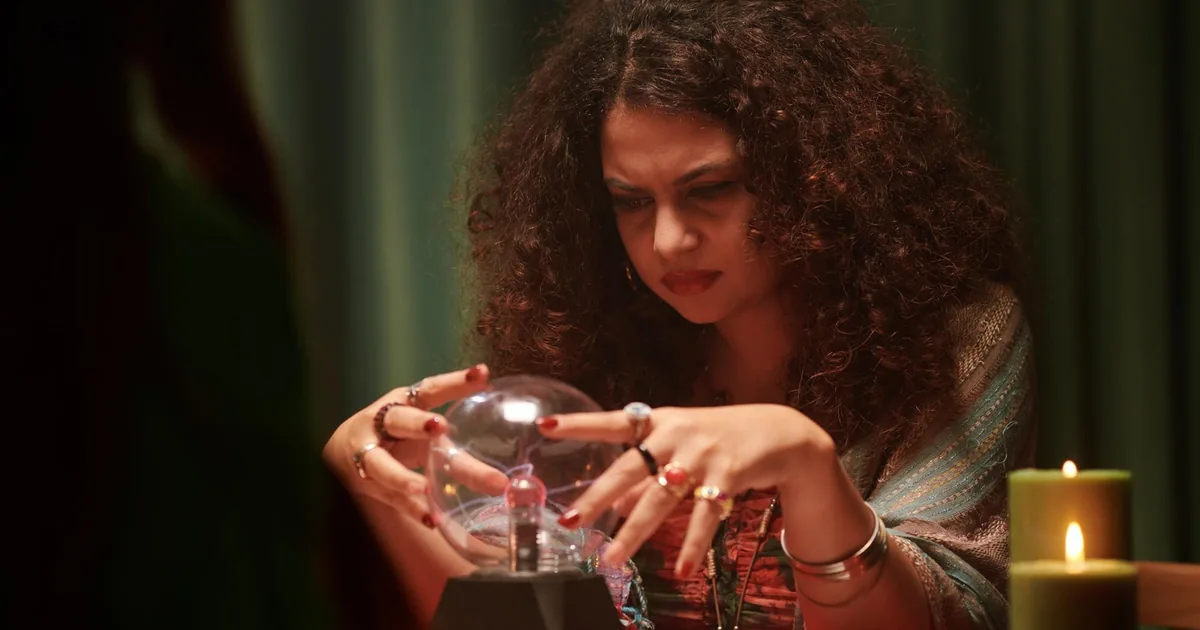
The path of a predictor is the path to yourself
When you take your first steps in prediction, it is important to remember: this is not a race for "correct" answers and not a way to peek into the future to avoid difficulties. It is, above all, a conversation with yourself. Each card, each rune is a mirror reflecting your hopes, fears, and hidden desires. The more you practice, the clearer you see that prediction is not magic, but a skill of attentive listening. You learn to hear the quiet voice of intuition that has always been with you but often remained unnoticed behind the noise of everyday life.
In this journey, it is important to maintain lightness and curiosity. Do not turn prediction into a heavy obligation or a source of anxiety. If you feel tired or disappointed — take a pause. Return to practice when you feel an inner response. Remember that even experienced tarot readers sometimes make mistakes, and that is normal. Mistakes are part of learning. They help you better understand the language of symbols and your own unique connection to it.
Esotericism, and prediction in particular, is not an escape from reality, but a way to live more consciously. When you know what might happen, you have a choice: prepare, change direction, or simply accept the situation with wisdom. It is a tool for expanding freedom, not limiting it. Therefore, do not fear the unknown. Approach practice with respect and an open heart, and it will respond to you with depth and clarity.
If you want to continue exploring, check out other articles about magic and self-discovery in the EXETERIC blog — there you will find materials on meditation, working with energies, and developing intuition. And if you are interested in how the stars influence your life, check out the astrology section and learn more about your zodiac sign. And remember: you are the main creator of your destiny, and predictions are only a compass that helps you choose the route. Trust yourself, and may your path be bright.
Frequently asked questions
Where should I start learning prediction if I am a complete beginner?
Start by choosing a tool that resonates with you: Tarot, runes, oracle, or even playing cards. Do not chase fashion — listen to yourself. Then master one tool, for example, Tarot, and practice daily. Start with simple exercises such as the "Card of the day": draw one card in the morning and analyze its manifestation throughout the day. This will help develop observation skills and a connection with the deck. Gradually move to more complex spreads, but do not rush — regularity matters more than speed.
Can I learn to predict the future on my own, or do I need a teacher?
Self-study is possible, and many predictors started exactly that way. The main thing is to have discipline and keep a journal of your practices and results. However, a teacher or mentor can help you avoid typical mistakes and speed up progress. If you do not have the opportunity to study with a master, use books, online courses, and communities of like-minded people. It is also important to develop intuition through meditation and self-observation. Remember that prediction is a skill that requires time and patience, so be kind to yourself on this path.
What mistakes do beginners most often make in predictions?
The most common mistake is taking every word of the cards too seriously. Prediction is a tool, not a verdict. The second mistake is divining in a bad mood or a state of stress, which distorts results. Beginners also often ask vague questions, such as: "What awaits me?" — instead of specific ones: "What do I need to know about my career this month?". And finally, many ignore their intuition, relying only on book meanings. Trust your feelings — they are often more accurate than textbooks.
How often can I divine on the same question?
It is not recommended to divine on the same question more than once over a reasonable period, for example, once a week or month. Constant re-divining only confuses and deprives the answer of clarity. If you are not satisfied with the answer, it is better to wait and observe the situation, then ask the question differently, perhaps with a different wording. Remember that the future is changeable, and the answer reflects the current moment. Trust the first answer and use it as a guide to action, not as a reason for endless doubt.