Tarot Yes or No: How to Get an Honest Answer with One Card
What is tarot yes or no and why it works
Tarot yes or no is not a separate deck or a clever ritual, but a way to ask the cards a closed question and receive a one-word answer. In the classical understanding, tarot is created for detailed narratives: past, present, future, causes and effects. But life often demands specifics: "Should I accept this job?", "Is it worth waiting for a call?", "Will I go on vacation this month?". This is exactly where tarot yes or no works — as a quick pulse of the situation, taken with a single card.
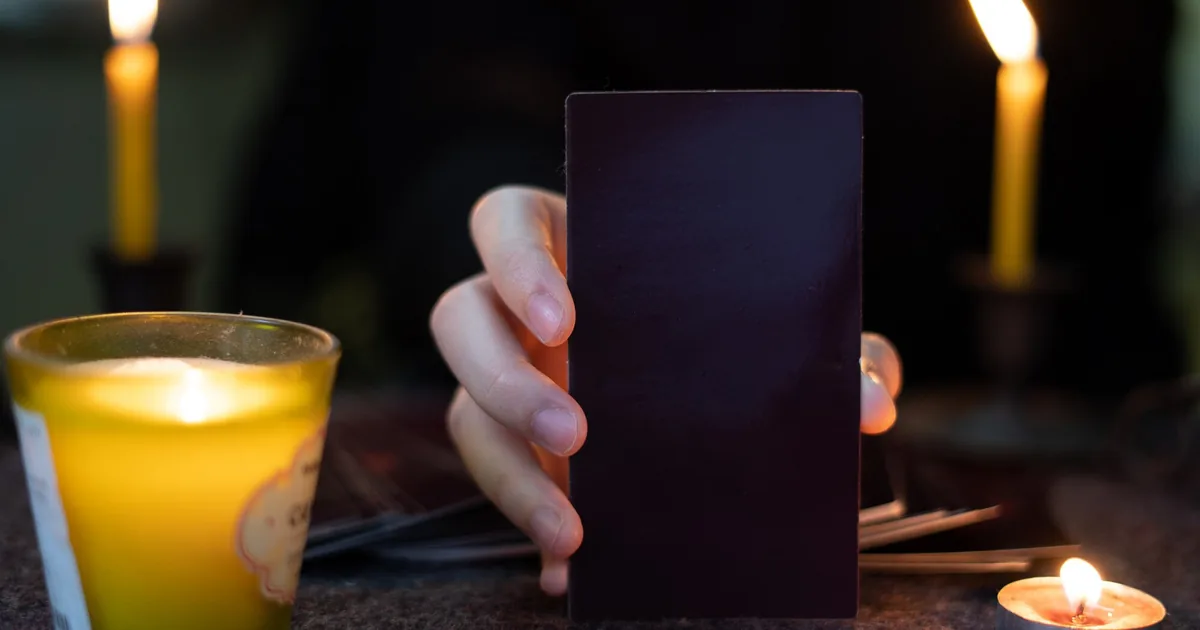
From an esoteric perspective, any card is a concentrated symbol that resonates with the energy of the moment. When we ask a closed question, the subconscious and the field of the situation respond through the archetype. Psychologically, this is also explainable: the rigid formulation "yes or no" cuts off extra interpretations and forces us to honestly look at our own expectations. We don't hide behind lengthy interpretations, but receive a clear sign — and then we decide how to relate to it.
It's important to understand: tarot yes or no is not a divination automaton. It is a tool for dialogue with yourself and with the subtle plane. If you ask the same question ten times hoping to hear "yes," the cards will start reflecting not the situation, but your anxiety. An honest answer comes when you are ready to hear any option. This is precisely why in the tradition of the Waite tarot and other systems, masters advise before a yes or no spread to formulate the request and internally release the outcome.
For beginners, tarot yes or no is excellent intuition training. You learn to read symbols quickly, without long spreads, and gradually tune into a personal connection with the deck. At home, you can do this every morning: one card, one question, one decision. This approach doesn't require a special altar or complex attributes — just a deck, silence, and your intention.
How to ask a question to get an honest answer
The first step to accurate tarot yes or no is proper formulation. Cards don't like vague questions like "What awaits me?" or "What should I do?". They need specifics that can be answered with "yes" or "no". The clearer the request, the cleaner the answer. Compare: "Will I be happy?" — too broad. "Should I accept the job offer by the end of the week?" — already specific, and the card will give a clear signal.
The second point is emotional state. If you ask a question in panic, resentment, or with a strong desire to hear only "yes," the result will be distorted. Esotericists call this "channel contamination": your energy blocks the energy of the situation. Before a tarot yes or no spread, it's helpful to take three slow breaths, release expectations, and mentally say: "I am ready to hear the truth." This is not magic for magic's sake, but a way to shift attention from anxiety to observation.
The third step is to choose the moment. At home, morning or evening hours work best, when no one distracts you. Don't divine on the go or in a noisy place. If you practice free tarot yes or no online, make sure notifications and extraneous sounds don't distract you. Silence helps the mind become clear, and then even one card will say more than ten spreads.
And fourth: don't ask the same question repeatedly on the same day. If the answer seems unclear, it's better to rephrase the question or return to it tomorrow. Tarot yes or no respects boundaries — both yours and its own. Persistent re-questioning turns dialogue into an interrogation, and the cards begin to answer chaotically. One question — one spread — one decision.
Meaning of tarot yes or no cards: suits and major arcana
To understand tarot yes or no meaning, you need to figure out how different groups of cards answer a closed question. In the Waite system and similar traditions, there are stable correspondences. Major arcana more often speak of fateful turns and don't always give an unambiguous "yes" or "no" — they rather show that the situation is more important than it seems. Minor arcana, especially numbered cards, answer more specifically.
The suit of Swords is traditionally associated with decisions, conflicts, and clarity. Yes or no tarot swords is often read like this: if a sword card falls in the upright position, the answer is more likely "yes," but with a condition — you'll have to make an effort or have a difficult conversation. Reversed swords are a signal of "no" or "not yet," because the situation requires a pause. Cups tarot yes or no is about feelings and relationships. Upright cups usually mean "yes" where it concerns love, friendship, reconciliation. Reversed — "no" or "not now," if emotions haven't matured yet.
Wands in tarot yes or no are the energy of action, creativity, and will. Upright wands say "yes, act," reversed — "no, you're rushing or have chosen the wrong path." Pentacles in tarot yes or no are related to money, the body, and material results. Upright pentacles — "yes," especially in questions of work and finances. Reversed — "no" or "yes, but later," because preparation is needed.
Separately, it's worth mentioning tarot yes or no knight. Knights in tarot are movement, speed, the nature of action. Knight of Swords — a quick answer, often "yes, but sharply." Knight of Cups — "yes" with an emotional tint. Knight of Wands — "yes, if you don't slow down." Knight of Pentacles — "yes, but slowly and thoroughly." A reversed knight almost always tilts the answer towards "no" or "not now."
| Suit / group | Upright position | Reversed position | Nuance of interpretation |
|---|---|---|---|
| Swords | Yes, through a decision | No, a pause is needed | Look at the number: ace — clear yes, ten — completion |
| Cups | Yes, if feelings are sincere | No, emotions are not ready | Consider the context of relationships |
| Wands | Yes, take action | No, you are rushing | Check your motivation |
| Pentacles | Yes, there will be a result | No or later | Look at the resources |
| Major arcana | Fateful yes | A lesson, not an answer | Require reflection |
This table is not a rigid law, but a guideline. Tarot yes or no interpretation always considers the question and your state. The same card in different situations can sound different. That's why it's so important to build a personal dictionary of meanings, not to memorize someone else's lists.
Tarot yes or no spread: a step-by-step technique for beginners
Tarot yes or no for beginners is the safest and simplest entry into practice. You don't need to memorize hundreds of combinations. One card and a clear question are enough. Here is a step-by-step technique that you can apply independently at home.
Step one: formulate the question so that it can be answered "yes" or "no". Write it down on paper — this helps cut off extra meanings. Step two: shuffle the deck, thinking about the question. Don't rush, let your hands remember the energy of the request. Step three: draw one card. You can draw from a fan, or from the top of the deck — whichever is more convenient for you. Step four: look at the card and determine its position — upright or reversed. Step five: correlate with the table of suits and major arcana, but be sure to add your own feeling from the image.
If you are doing tarot yes or no online, the algorithm is the same, only the program chooses the card. Many are skeptical of this, but practice shows: a digital deck works no worse than a paper one, if you maintain intention. Tarot yes or no online free is a convenient way to practice when there's no opportunity to lay out cards physically. The main thing is not to turn it into mindless button clicking.
For those who want to delve deeper into symbolism, it's useful to keep a spread journal. Write down the question, the card, your initial interpretation, and how the situation resolved. In a month, you'll see patterns: which cards more often say "yes" to you, which say "no". This is how to understand tarot yes or no through personal experience. No theory can replace your own statistics.
And one more point: don't be afraid of reversed cards. Tarot yes or no reversed is not "bad," but "different." A reversed card often means the answer is not straightforward, but conditional. For example, a reversed Ace of Pentacles in a question about money might say: "Yes, but not now, first pay off your debts." This is not a refusal, but a clarification.
Myths and reality: what tarot yes or no doesn't do
There are many myths around quick spreads. Some fear that the cards will "punish" for an incorrect question. Others believe that tarot yes or no online free is a toy that doesn't work. Still others think that one card can't give an accurate answer. Let's examine the most common misconceptions.
| Common myth | Why it's not so | How it really is |
|---|---|---|
| "One card is too little for the truth" | Accuracy depends not on quantity, but on the clarity of the question | One card gives a clear signal if the request is specific |
| "Online spreads don't work" | The energy of intention is more important than the medium | A digital deck responds just as well if you are focused |
| "A reversed card is always no" | Reversed position is a nuance, not a verdict | It says "not now" or "with a condition" |
| "You can't divine for yourself" | This is superstition, not a rule | You can divine for yourself if you are honest with yourself |
Tarot yes or no what is it really? It's a tool that doesn't cancel your responsibility. The cards don't decide for you; they show a probabilistic vector. If "yes" falls, it doesn't mean you can sit idle. If "no" — it's not a reason to fall into despair, but a signal to reconsider your strategy. Awareness lies precisely in this: accepting the sign and acting with it in mind.
Another myth is that you need a special gift for tarot yes or no. In reality, a desire to learn and attentiveness are enough. Tarot yes or no signs are unique for each practitioner: some feel the answer even before the card is turned, others rely on classical meanings. Both are normal. The path in esotericism doesn't require initiation — it requires interest and honesty.
And finally: don't use tarot yes or no to test people or for manipulations. The question "Does he love me?" in a yes/no format can give an answer, but it will be superficial. For deep topics, detailed spreads are better suited. And for everyday decisions — yes, one card works wonders.
Tarot yes or no at home: practical tips
Tarot yes or no on your own can be practiced anywhere, but at home there are advantages. You can create a calm atmosphere, light a candle, turn on quiet music. These are not mandatory attributes, but they help shift your state. If you're a beginner, start simple: set aside 10 minutes in the morning, ask one question, and draw a card. Write down the result. In two weeks, you'll notice you've started to better understand the language of the deck.
For those who prefer a digital format, tarot cards yes or no online are a convenient alternative. You can do spreads during a break or on the go. But remember: even an online session requires inner silence. If you're distracted by chats and news, the answer will be blurred. So before clicking the "draw card" button, pause and focus on the question.
Another practical point is interpretation. Don't memorize meanings by rote. It's better to keep the table of suits and major arcana at hand, but always add your personal feeling. Ask yourself: "What does this card say specifically to me in this situation?" Intuition is the main tool in tarot yes or no. It will hint at nuances that aren't in any reference book.
And don't forget about ethics. Don't divine for other people without their consent. Don't use tarot yes or no to control someone else's life. Respect for free will is the foundation of conscious practice. If you feel that a question violates someone's boundaries, it's better to rephrase it or decline the spread.
Finally, remember that tarot yes or no is just one type of divination. If you're interested in variety, check out other practices in the EXETERIC blog — there are materials on runes, oracles, and other tools for self-knowledge. And for those who want to see a broader picture, it's useful to explore the astrology section — astrology and tarot complement each other beautifully. If you're looking for the deep causes of events, pay attention to the Matrix of Fate calculator — there, numbers and arcana combine into a holistic portrait of a personality.
Tarot yes or no: types of spreads and how to choose yours
Although the classic tarot yes or no is one card, there are variations. Tarot yes or no types differ in the number of cards and the method of interpretation. The simplest is one card per one question. It's good for quick decisions. The second option is three cards: "yes," "no," and "alternative." You draw three cards and see which one is stronger in energy. The third is a spread by suits: you divide the deck into four parts and see which suit dominates. This gives an answer with a nuance: "yes, but through feelings" or "no, because resources are lacking."
How to choose your type? Start with one card. When you feel confident, move to three. Don't complicate things prematurely. Tarot yes or no for beginners doesn't require multi-step schemes. Simplicity is the key to a clean signal. And remember: the more cards, the more interpretations, and therefore, the higher the risk of getting confused.
If you practice Waite tarot yes or no, focus on the classical images. Waite provided detailed illustrations that help read the card intuitively. For example, the Knight of Swords charges forward — this is a clear "yes, but quickly." The Eight of Cups shows departure — more likely "no, it's time to let go." These visual clues work without memorizing meanings.
For those who want a systematic approach, it's useful to study the guide to human design — understanding your type and strategy helps ask more precise questions. And if you want to understand dream symbolism, which also speaks the language of images, check out the EXETERIC dream dictionary. All these practices are parts of one path of self-knowledge.
Ultimately, the choice of tarot yes or no type is a matter of personal comfort. Some love the minimalism of one card, others — a three-card spread. Try, record, compare. Your personal method will always be more accurate than someone else's.

Tarot yes or no as a path to self: peace instead of fear
When you master tarot yes or no, you'll notice that what changed is not so much the quality of predictions, but your relationship with uncertainty. One card stops being a "verdict" or a "gift of fate" — it becomes a mirror reflecting your own inner request. This is the main shift: esotericism stops being a way to peek behind the veil and becomes a tool for self-knowledge. You learn to hear yourself, trust your intuition, and make decisions without panic, even if the answer turned out not to be the one you expected.
This approach is the foundation of EXETERIC practices. We don't promise that the cards will solve your problems or cancel the need to act. But we know for sure: regular, careful work with symbols makes life more conscious. You start seeing patterns where there was chaos before, and you stop fearing the unknown. Tarot yes or no, in this sense, is the perfect training: a small daily step that gradually changes your perspective.
If you want to move further, don't stop at one technique. Check out other practices in the EXETERIC blog — there are materials on runes, oracles, meditations, and other ways to dialogue with yourself. And for those who love seeing the big picture, it's useful to explore the astrology section: astrology and tarot complement each other beautifully, giving a three-dimensional view of the situation. The main thing is not to turn practice into an obligation or a way to escape reality.
Try it right today: ask one honest question, draw one card, and just sit with it for a few minutes. Don't demand an immediate answer, don't look for a catch. Allow the symbol to unfold in your consciousness — and you'll be surprised how clear the quiet inner voice can be. Esotericism is not a panacea or a reason for fear, but an invitation to a calm, respectful conversation with yourself. Start small, and the path of self-knowledge will become a reliable support for you.
Frequently asked questions
Can you divine with tarot yes or no every day?
Yes, you can, if you ask different questions and don't turn it into an obsessive check. Daily practice with one card is excellent intuition training and a way to tune into the day. However, it's important to maintain balance: if you feel you're divining out of anxiety or trying to re-ask the same question, it's better to take a pause. Tarot yes or no respects boundaries, and one question a day is a healthy norm. If the answer seems unclear, return to it tomorrow, not in five minutes.
What to do if the card gave a contradictory answer?
A contradiction is not an error, but an invitation to deeper reflection. A reversed card or a major arcana often says not "yes" or "no," but "the situation is more complex than it seems." In such a case, rephrase the question: perhaps it was too narrow or emotionally charged. Try asking it differently or breaking it into two simple ones. It's also helpful to write down your first feeling from the card — intuition often hints at the correct nuance before you can logically explain it.
Do you need to cleanse the deck after a yes or no spread?
There are no strict rules, but many practitioners prefer gentle cleansing. It's enough to hold the deck in silence, leaf through it, or mentally thank it for the answer. If the question was emotionally heavy, you can place the cards overnight near salt or under moonlight. The main thing is not to turn cleansing into a mandatory ritual that causes anxiety. Tarot yes or no is a dialogue, not a contract with spirits. A respectful attitude towards the deck is more important than any formalities.
Can you ask tarot yes or no a question about another person?
Technically, you can, but ethically — only if the question concerns your relationship with them, not an attempt to control their life. Asking "Does he love me?" or "What does he think of me?" is permissible if you are ready to hear any answer and won't pressure the person. But divining about third parties without their consent to find out their secrets or influence their decisions is bad practice. It violates free will and quickly depletes your own energy. It's better to formulate the question through yourself: "What should I know about these relationships?"