Tarot: How to Start Studying Cards and How to Get an Accurate Answer to Your Question
Tarot: How to Start Learning the Cards and Get an Accurate Answer to Your Question
Tarot is not just a set of beautiful pictures, but a powerful tool for self-discovery and prediction. Many beginners get lost, not knowing where to start, and make typical mistakes: they jump into complex spreads, try to memorize all meanings, or fear "negative" cards. In this article, we will break down how to properly enter the world of tarot, choose a deck, establish a connection with it, and get accurate answers to your questions. You will learn how tarot differs from oracles, how to interpret symbols and combinations, and how to use the cards for everyday decisions. Let's go!
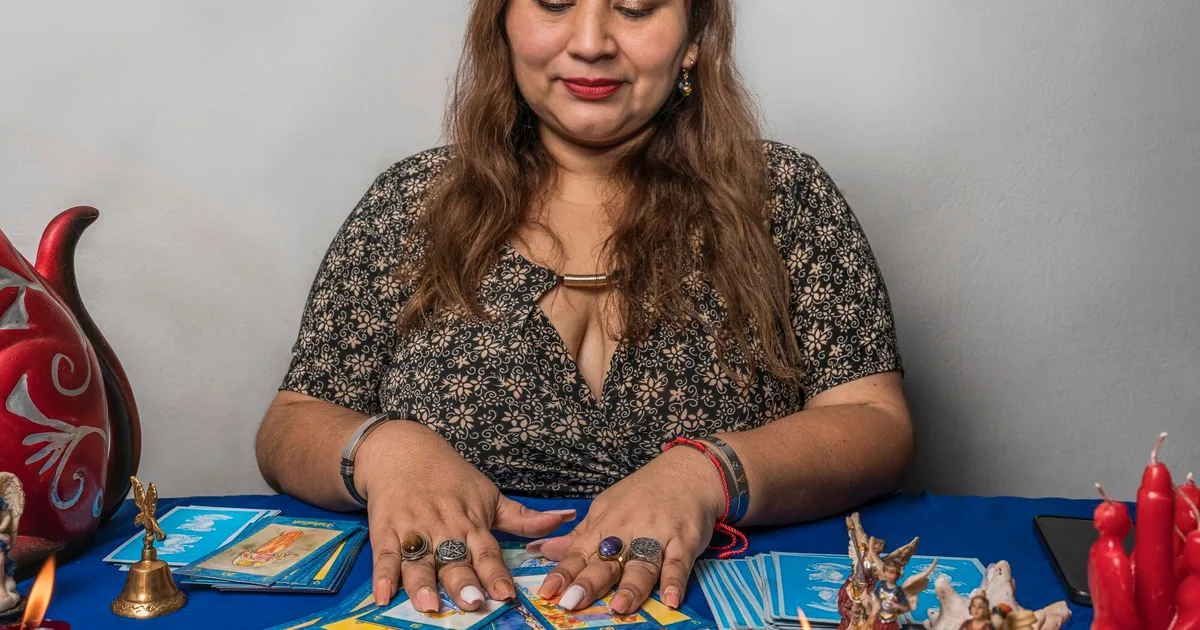
The Essence of Tarot: What It Really Is
Many perceive tarot as a way to know the future, but in reality, it is much deeper. Tarot is a system of symbols reflecting archetypes of human experience. Each card is a key to understanding situations, emotions, and choices. Working with tarot helps develop intuition, awareness, and the ability to see hidden connections. As experienced tarot readers say, the cards are a mirror in which we see not fate, but our own intentions and fears.
Unlike simple fortune-telling, tarot offers a structured approach. The deck consists of 78 cards: 22 Major Arcana and 56 Minor Arcana, divided into four suits (wands, cups, swords, pentacles). Each suit corresponds to a specific area of life: wands for actions and passion, cups for emotions and relationships, swords for thoughts and conflicts, pentacles for the material and the body. Understanding these correspondences is the first step to deep analysis.
The essence of tarot is not in prediction as such, but in helping with decision-making. When you ask a question and draw cards, you receive not a verdict, but a hint on what to pay attention to. For example, if the Three of Swords appears in a relationship spread, it does not mean "breakup," but a signal of the need for an honest conversation or a review of expectations. This approach makes tarot a safe and useful tool for the modern person.
How to Choose Your First Deck: Zen Tarot, Tarot Nova, and Others
Choosing a deck is a responsible step. Beginners are often advised classic decks like Rider-Waite, but there are also more modern options that might be closer in spirit. For example, Zen Tarot (Osho Zen Tarot) is a deck created based on Zen Buddhism, with an emphasis on mindfulness and inner peace. It is ideal for those who seek not so much predictions as meditative self-discovery. Zen tarot cards feature bright, inspiring images and focus on the present moment, not the future.
Another popular option is Tarot Nova (Nova Tarot), a modern deck with a minimalist design that appeals to youth. It retains the classic structure, but the card interpretations are more adapted to modern realities. If you want a deck that is understandable without deep study of esotericism, tarot nova is a good start.
It is also worth paying attention to Tarot Angel (Angel Tarot), a deck with an angelic theme that emphasizes positive messages and support. It is suitable for those who are afraid of "scary" cards and want a gentle approach. However, remember: any deck is just a tool, and the main thing is your connection with it. Choose the one that resonates with you visually and energetically. If you feel drawn to certain cards, do not doubt it—this is your choice.
Preparation for Work: Attunement and First Steps
Before you start reading, it is important to establish a connection with the deck. After buying a new deck, do not rush into complex spreads right away. Hold the cards in your hands, shuffle them, feel their energy. Some practices advise sleeping with the deck under your pillow for several nights so that it "gets used" to you. This is not superstition, but a way to attune to subtle vibrations.
Create a calm environment for the reading: dim the lights, light a candle if you wish. It is important that you are not distracted. Formulate the question clearly. Instead of "What awaits me?" it is better to ask "What actions should I take to improve my relationships?" The more specific the question, the more accurate the answer.
Before the first spread, you can perform a simple ritual: hold the deck in your hands, close your eyes, take a few deep breaths, and mentally ask for guidance. Some tarot readers recommend starting with a daily card: in the morning, draw one card, and in the evening, analyze how it manifested in the day's events. This will help you quickly memorize the meanings and learn to connect symbols with reality.
Tarot Card Meanings: How to Memorize and Interpret
One of the main difficulties for beginners is memorizing the meanings of all 78 cards. Do not try to learn everything at once. Start with the Major Arcana—there are only 22, and they describe major life stages. For example, The Fool is the beginning of the path, The Magician is the realization of plans, The High Priestess is intuition, The Emperor is structure and authority. Study a few cards a day, reflect on how they manifest in your life.
For the Minor Arcana, it is important to understand the suits and numerical values. Ace is the seed, the beginning; Two is balance, choice; Three is growth, cooperation; Four is stability; Five is conflict; Six is harmony; Seven is challenge; Eight is movement; Nine is completion; Ten is the outcome. For example, the Three of Cups is celebration, friendship, emotional abundance, while the Ten of Swords is a painful end, but also liberation.
However, the meanings of the cards are not static. In the context of the question and neighboring cards, they can change. For example, Death (Arcanum 13) often frightens, but in reality, it signifies transformation, the end of an old stage. In combination with other cards, it can indicate changes in career or relationships. Therefore, it is important to study tarot combinations—how the cards interact with each other. Start with simple spreads of 2-3 cards and gradually move to more complex ones.
Tarot Spreads for Beginners: From Simple to Complex
There are many spreads—from simple to complex. Beginners should start with the "Card of the Day" spread, which we mentioned, and "Three Cards": past, present, future. This spread helps see the dynamics of a situation. For example, you ask about work: the first card shows what led to the current situation, the second shows what is happening now, and the third shows where it will lead if nothing changes.
Another useful spread is the "Cross": five cards arranged in the shape of a cross. It shows the essence of the problem, hidden influences, advice, and the likely outcome. For a more detailed analysis, you can use the "Celtic Cross"—a classic 10-card spread—but it requires experience. Do not be discouraged if it is difficult at first—practice makes perfect.
When you master the basic spreads, you will be able to create your own. For example, for a question about a choice, you can draw a card for each option and compare their energy. For relationships, draw a card for your partner, for yourself, and for the outlook. The main thing is to clearly define the positions and not overload the spread with extra cards.
How to Get an Accurate Answer: Attunement and Intuition
The accuracy of the answer depends not on "magical powers," but on your ability to attune and trust your intuition. Before the reading, clear your mind of extraneous thoughts. If you are anxious or doubtful, it is better to postpone the reading. Ask the question once—repeated questions on the same topic lead to confusion.
When interpreting the cards, pay attention not only to traditional meanings but also to your first impressions. What images arise? What feelings does the card evoke? Intuition often suggests more accurate answers than memorized meanings. For example, if the Five of Pentacles appears in a financial question spread, you might feel a fear of loss, but intuitively understand that it is a warning to review the budget, not an impending bankruptcy.
It is also important to consider reversed cards. Some tarot readers use them, some do not. If you use reversed cards, remember that they indicate blocked energy or an internal aspect of the situation. For example, a reversed Strength card might mean insecurity or suppressed aggression. But if you are a beginner, you can start with upright cards to avoid complicating things.
Tarot Assistance: How to Use the Cards in Everyday Life
Tarot is not only for predictions but also for practical help. Many use the cards for meditation, self-discovery, and decision-making. For example, you can draw a card in the morning and use it as a focus for the day: if The Empress appears, try to show care and creativity; if The Hermit appears, spend time in solitude and reflection.
Tarot also helps in difficult situations. When you face a choice, draw a card for each option and compare their energy. For example, you are unsure whether to change jobs. The card for "stay" might be the Four of Pentacles—stability, but also stagnation. The card for "leave" might be The Chariot—movement and victory. This does not mean you should blindly follow the cards, but they can highlight hidden aspects.
Many ask questions about the future: tarot forecast for the month, year, or a specific date. For example, tarot for August or tarot for September can show general trends. But remember: the future is not fatal, and the cards show only one of the possible scenarios. Your free will can always change the course of events.
Common Beginner Mistakes and How to Avoid Them
Many beginners make the same mistakes. Here are some of them and ways to avoid them:
- Too frequent readings on the same question. If you draw cards every day asking "will he call me," you only confuse yourself. Give the situation time.
- Fear of "negative" cards. Death, The Tower, The Devil—these are not a verdict, but an indication of transformation or challenge. See them as opportunities for growth.
- Ignoring intuition. If you feel that a card speaks of something different from what is written in the book, trust yourself. Over time, you will develop your own style.
Also, do not rely on tarot for serious matters such as health or finances without consulting specialists. Tarot is a tool for reflection, not a replacement for a doctor or lawyer.
Myths About Tarot: Dispelling Fears
There are many myths surrounding tarot that scare beginners. Let's break down some of them.
| Common Myth | Why It's Not True | What's Really Happening |
|---|---|---|
| Tarot is demonic and sinful | Tarot is a tool, like psychology. It is not linked to religion unless you choose to make it so. | Tarot helps understand yourself, develop intuition and awareness. |
| Cards can cast a curse | Cards have no power on their own. Harm can only come from your own negative thinking. | Tarot is a mirror; it does not create events but reflects probabilities. |
| You can only read on certain days | There are no restrictions except your own inner state. | Read when you are calm and ready for an honest conversation with yourself. |
Understanding these myths will help you relax and enjoy the practice.
Tarot 2026: Forecasts and Trends
Many are looking for tarot forecast 2026 or tarot 2026 to find out what the future holds. But instead of looking for ready-made forecasts, you can learn to make them yourself. In 2026, many tarot readers predict an emphasis on spiritual growth and a reevaluation of values. The cards that will appear frequently are The Star, The Moon, and The World. The Star points to hope and inspiration, The Moon to the need to trust intuition, and The World to the completion of cycles.
If you want to make a forecast for 2026, draw one card for each month or for key areas of life. For example, the card for career might be the Ace of Wands—new beginnings, for relationships, the Two of Cups—harmony. But remember, forecasts are not a verdict but a guideline.
Also, in 2026, an increase in online readings and digital decks is expected. But nothing can replace live contact with the cards. Therefore, if you seriously want to master tarot, get a physical deck and practice regularly.
Practical Example: A Spread for a Situation
Let's analyze a specific example. Suppose you want to know whether you should move to another city. You use the "Three Cards" spread: past, present, future.
You draw: in the past—Eight of Pentacles (hard work, but perhaps you worked too much and rested too little). In the present—The Moon (uncertainty, fears, hidden factors). In the future—The Sun (success, joy, clarity). This suggests that the move could bring long-awaited happiness, but right now you are in a state of uncertainty and fear the unknown. The cards' advice is to trust the process, and everything will work out.
This analysis helps see the situation in three dimensions and make a balanced decision. Practice on real situations, and you will quickly learn to read the cards.
Conclusion: Your Path in Tarot
Tarot is a fascinating journey into yourself. Do not be afraid of mistakes, trust your intuition, and remember that the cards are just a tool. Start small: choose a deck, study the meanings, do simple spreads. Over time, you will gain confidence and be able to use tarot to answer complex questions. May your practice be mindful and joyful!
Tarot as a Path to Self: From Beginner to Conscious Practice
When you take your first steps in tarot, remember: this is not a race or an exam where you need to memorize everything by heart. It is more like a conversation with yourself in the language of symbols. The cards do not dictate fate—they offer a way to look at a situation from different angles, to notice what you might be missing. The calmer and more respectful you are towards the practice, the clearer the answers become. Do not blame yourself for mistakes—every inaccurate interpretation is a step towards understanding.
Esotericism in general and tarot in particular are tools for conscious living. They help develop intuition, make decisions, and better understand your desires. But they do not replace common sense and do not cancel responsibility for your choices. Use the cards as an advisor, not as a judge. And then they will become a reliable helper on your path.
At the media EXETERIC, we strive to make esotericism understandable and safe for everyone. Our practices and articles help you understand the nuances of tarot, astrology, and other systems without falling into superstitions and fears. If you want to delve deeper into the topic, check out the articles section—there you will find a lot of useful information about cards, spreads, and working with energies. And if you want to check the stars, in our astrology section, you can find out what the planets have in store for you in the near future.
Do not fear the unknown—it is just waiting for you to pay attention to it. Start small: choose a deck that resonates with you, ask one important question, and let the cards tell their story. Practice regularly but without fanaticism, and you will feel your confidence growing. Tarot is a journey that lasts a lifetime, and every step makes you wiser. May your cards always be kind advisors, and your intuition a faithful compass.
Frequently Asked Questions
Can I learn tarot on my own, or do I need a teacher?
You can start learning tarot on your own—there are many books, online courses, and articles available. The main thing is to choose a deck that resonates with you and practice regularly, for example, by drawing a card of the day. However, a teacher or experienced mentor can help you master the nuances of interpretation faster and avoid typical mistakes. If you feel stuck, you can consult a practitioner, but remember: the foundation of your practice is your own intuition and experience.
How often can I read on the same question?
It is not recommended to read on the same question more than once a month, and preferably less often. If you draw cards daily asking the same thing, you risk getting confused and receiving contradictory answers, which will only increase anxiety. Give the situation time to develop and yourself time to process the information received. If the question is truly important, it is better to wait at least two or three weeks before repeating the spread; otherwise, you will be reading not for clarification but for reassurance, which reduces accuracy.
What should I do if a "scary" card appears, like The Tower or Death?
First of all, do not panic. In tarot, there are no "bad" cards—there are cards that indicate difficult periods or transformations. The Tower symbolizes sudden changes that may destroy the old to make way for the new. Death is the end of one stage and the beginning of another, not physical death. Perceive such cards as an invitation to reflect on what in your life needs to change and as an opportunity for growth. If the card frightens you, take a pause, breathe, and try to see a positive message in it.
Should I use reversed cards in tarot?
Using reversed cards is a matter of personal choice. Many tarot readers believe that reversed cards add depth and show blocked energy or internal aspects of a situation. However, beginners are often advised to start with upright cards to avoid overwhelming themselves. If you feel ready, you can gradually introduce reversed meanings, but remember: the main thing is your intuition and the context of the spread. There are no strict rules—practice in a way that is comfortable for you, and over time you will find your own approach.