Tarot card of the day: how to draw and interpret daily advice
What is the card of the day and why do you need it
The card of the day is perhaps the simplest and at the same time the most profound practice in tarot. You draw one card in the morning or the evening before, and it becomes your compass for the next 24 hours. But don't rush to treat it as a prediction — it's more like a mirror that shows which energies are active in you and around you.
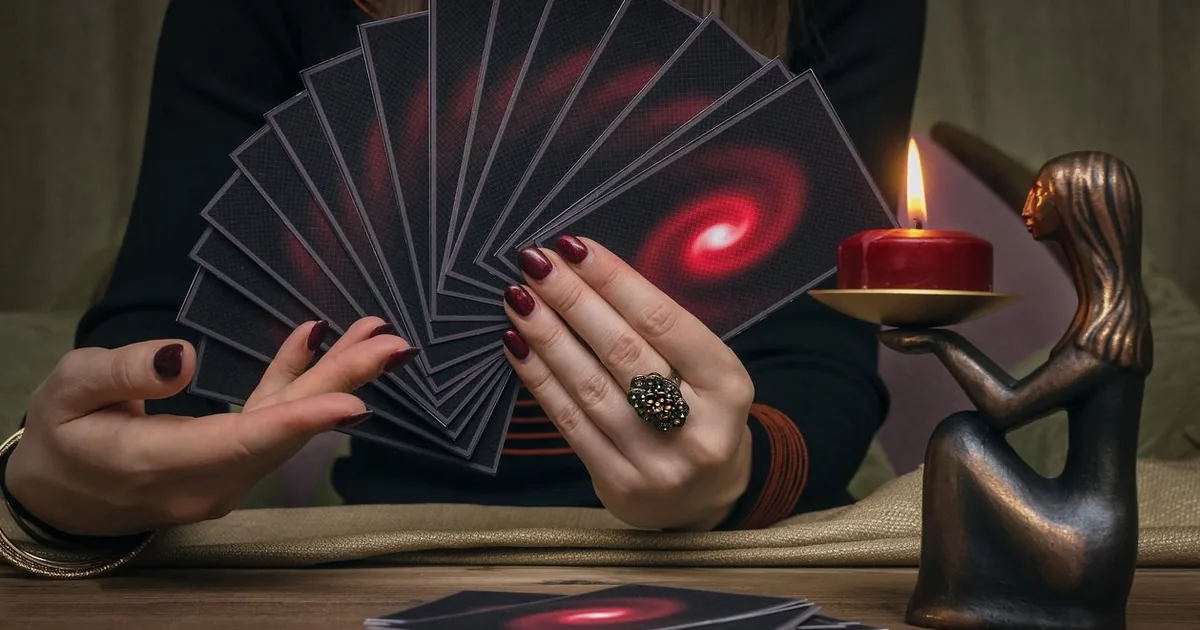
At the core of the card of the day lies the idea that each day carries a certain rhythm, and tarot helps you tune into it. This is not fatalism: the card doesn't say that something specific will happen, it highlights what to pay attention to, which qualities to express, and which ones to hold back. For example, if the Six of Swords comes up, perhaps today is the day to finish old business and move forward, rather than cling to the past.
Why does this work? From an esoteric perspective, the card of the day is a dialogue with your subconscious through symbols. From a psychological perspective, it's a tool for reflection that helps structure your thoughts and intentions. Either way, the practice develops intuition and mindfulness, and that's what matters most.
Many people fear that the card of the day might "predict" something bad. But tarot doesn't predict — it reflects. Even "scary" cards like the Tower or the Ten of Swords carry the potential for transformation and liberation. The important thing is not to be afraid, but to understand what your subconscious is trying to tell you.
How to draw the card of the day correctly: step-by-step guide
It might seem simple — you pull a card and that's it. But for the practice to be meaningful, it's important to follow a few rules. Here's a simple guide that works for both beginners and experienced practitioners.
Step 1. Tuning in
Before drawing a card, take a minute of silence. Sit comfortably, close your eyes, take a few deep breaths. Formulate your intention: "I am open to guidance for today." Don't ask specific questions like "What awaits me at work?" — the card of the day answers a more general request: "What is important for me to know today?"
Step 2. Shuffling and choosing
Shuffle the deck however feels right to you. You can simply hold it in your hands and shuffle while thinking about the day. Then draw one card — either from the deck, or fan the cards out and pass your hand over them, feeling which card "responds." Trust your first impulse, don't overanalyze.
Step 3. Writing it down
Write the card down in a journal or just in notes on your phone. Include the date, the card, and your initial impressions. In the evening, when the day is over, return to your note and reflect on how the card manifested. This is a key moment: this is how you learn to read signs and notice coincidences.
Step 4. Interpretation
Look up the card's meaning in a book or app, but don't stop there. Ask yourself: "How does this symbol resonate with me today?" For example, the Empress might speak of creativity, care, or fertility — in which area of life is this relevant? Maybe it's time to devote attention to your project or take care of your loved ones?
It's important not to get stuck on standard meanings. Tarot is a living system, and each card can manifest differently depending on the context. Trust your intuition.
Interpreting the card of the day: key principles
So, you've drawn your card. What now? Interpretation is the most interesting and at the same time the most challenging stage. Here are a few principles to help you get the most out of it.
Look at the energy, not the literal meaning
Each card carries a specific energy. For example, the Ace of Wands is impulse, enthusiasm, a beginning. Even if you don't have a specific "new project," the card's energy might manifest as a desire to start something: go to the gym, write an article, call an old friend. Allow this energy to guide you.
Consider reversed positions
If you use reversed cards, remember: they don't always mean something negative. Sometimes it's simply an internal process or a call to pay attention to certain aspects. For example, the reversed Five of Pentacles might indicate that you're ignoring your vulnerability, but you have the resources to cope.
Connect the card to the events of the day
Don't expect the card to "come true" literally. Instead, observe: perhaps the card's theme will surface in a conversation, in the news, or in your emotions. For example, Death comes up — and you suddenly decide to let go of an old habit or end a relationship that was dragging you down. That's the card manifesting.
Examples of interpretation
Let's look at a few cards to make it clearer. The Fool — a day of lightness and spontaneity, don't be afraid to take risks. The Moon — everything is ambiguous, illusions are possible, trust your intuition rather than facts. Temperance — a day of balance, avoid extremes. The World — completion of a cycle, a sense of wholeness, celebration.
| Card | Traditional meaning | Manifestation in life | What to do |
|---|---|---|---|
| The Fool | New beginning, spontaneity | Unexpected invitation, desire to try something new | Don't be afraid to take risks, stay open |
| The Moon | Illusions, doubts | Difficulty trusting, deceptive impressions | Trust your intuition, verify information |
| Death | Transformation, ending | Separation, job change, letting go of habits | Release the old to make room for the new |
Card of the day for different areas of life
Sometimes you want advice not for the whole day, but for a specific area: work, relationships, health. In that case, you can adapt the practice. But remember: the card of the day remains general, you simply focus on one aspect.
Work and finances
If the Ten of Pentacles comes up — the day is favorable for financial matters, pleasant bonuses are possible. The Three of Wands — a good time for planning and expanding horizons. The Five of Pentacles, on the other hand, might indicate a feeling of lack, but in reality it's a call to reassess your resources — perhaps you're underestimating yourself.
Relationships
The Lovers — a day of harmony, but also of choice. You might have to make a decision in your love life. The Two of Cups — reciprocity, support. The Four of Swords, however, might speak of the need for a pause — don't force events, give yourself and your partner time to rest.
Health and well-being
Strength — you have plenty of energy, but don't waste it. Temperance — balance in diet and exercise. The Ten of Swords, on the other hand, might signal stress — today it's especially important to take care of your mental health, perhaps it's worth slowing down the pace.
Common mistakes and how to avoid them
Even experienced practitioners sometimes stumble. Here are typical mistakes when working with the card of the day and ways to avoid them.
| Mistake | Why it doesn't work | How to fix it |
|---|---|---|
| Drawing a card in a hurry | No proper mindset, the answer will be random | Spend at least 2 minutes in silence and intention |
| Literal interpretation | The card is a symbol, not an instruction | Ask yourself: "How does this energy manifest in me?" |
| Ignoring reversed cards | You lose depth | Study reversed meanings or simply look at the card's energy |
Another mistake is expecting the card to "come true." Tarot doesn't predict the future, it shows a tendency. If the Three of Swords comes up, it doesn't mean something sad will happen. Perhaps you'll simply become aware of your sadness and be able to work with it.
Don't ignore repeating cards. If the same card comes up several days in a row, it's a clear sign that your subconscious is trying to reach you. Write it down and reflect on what these days have in common.
How to deepen your card of the day practice: rituals and journaling
To make the card of the day more than just fortune-telling, but a true tool for growth, add a few elements.
Morning ritual
Make the card of the day part of your morning ritual: drink tea, light a candle, pick up your deck. This creates an anchor — your brain tunes into a mindful day. You can say an affirmation connected to the card. For example, if the Star comes up: "I trust the universe and I am open to a miracle."
Evening reflection
In the evening, be sure to return to your card. Write down how it manifested. Over time, you'll notice that the cards often "hit the mark." This strengthens your faith in the practice and in yourself.
Card of the day journal
Keep a separate journal. After a month, reread your entries — you'll see patterns and recurring themes. This is invaluable material for self-discovery.
You can also use the card of the day for meditation: imagine yourself stepping into the card's image, feeling its energy. This will deepen your understanding of the symbols.
And remember: the tarot card of the day is not a way to know the future, but a way to better understand yourself and the present moment. Practice with curiosity, without fear, and tarot will become your reliable companion.
Tarot as the art of being yourself
When you start practicing the card of the day, you're not just learning to divine — you're learning to listen to yourself. Each card is neither a verdict nor a coincidence, but a conversation with your inner world. Tarot shows you what you already know but haven't yet realized. And that's its main magic: it doesn't give answers, it helps you ask the right questions.
Remember that esotericism is not a way to escape reality, but a way to make it more conscious. The card of the day is not a crystal ball, but a mirror reflecting your true desires, fears, and possibilities. Treat it with respect, but without fanaticism. Allow yourself to make mistakes, to try, to doubt — and the practice will become a true art of being yourself.
If you want to go deeper into this topic, check out the articles on magic and self-discovery on EXETERIC. There you'll find even more techniques and reflections on how esotericism helps us better understand ourselves and the world around us. And if you're curious about how the stars influence your day, we recommend checking your zodiac sign in our astrology section.
And one last thing: don't be afraid of the unknown. What seems complicated can actually be simple and clear if you approach it calmly and with curiosity. Try the card of the day practice as an experiment on yourself — without expectations and fear. Let it become your daily ritual — not to know the future, but to meet the present. And if you want more practices and inspiration, check out EXETERIC media — here we talk about magic simply and clearly.
Frequently asked questions
Can I draw the card of the day in the evening?
Yes, the evening is a great time for the card of the day. Many practitioners prefer to draw the card for the next day so that they're already prepared for its energies in the morning. If you draw the card in the evening, you can tune into the upcoming day, and refresh it in your memory in the morning. The key is to do it mindfully, without rushing, and be sure to write the card down so you can summarize the next evening.
What to do if a "scary" card comes up, like the Tower or Death?
Don't be afraid. Tarot doesn't predict literal events, it reflects your inner state. "Scary" cards often speak of the need for change, liberation from the old, or transformation. For example, the Tower might indicate that it's time to tear down outdated beliefs, and Death — to end a stage that weighs you down. Instead of fear, ask yourself: what in my life needs renewal? This is a chance to grow.
Do I need to use reversed cards for the card of the day?
This is a matter of personal choice. Beginners are often advised to start with upright cards to avoid being overwhelmed. But reversed cards add depth and nuance. If you decide to use them, remember: a reversed card is not always negative, it can indicate an internal process or a call to pay attention to certain aspects. The key is not to get stuck on the literal meaning, but to analyze the card's energy.
How often can I draw the card of the day?
You can draw the card of the day daily — it's a safe and beneficial practice. It doesn't overwhelm you; on the contrary, it helps you tune into the day and develop intuition. Some people take breaks when they feel tired or short on time, but in general, regularity is encouraged. The important thing is not to turn it into an obligation — it's better to draw the card with pleasure than out of compulsion. If you miss a day, no big deal, just return to the practice when you feel the need.