Meaning of tarot cards: the major arcana and their meaning
Tarot as a Mirror: Why We Need the Major Arcana
Meaning of tarot cards. Tarot is not just a deck of pictures, but an entire system of symbols that helps us communicate with our own subconscious. The Major Arcana are 22 cards considered the heart of the deck. They describe the main plots of life: from a naive beginning to deep transformation. Unlike the Minor Arcana, which speak of everyday situations, the Major Arcana reveal big life themes: fateful choices, inner crises, important stages of becoming.
Many people fear Tarot: it seems that the cards predict the inevitable, meaning we are hostages of fate. But in reality, Tarot is a tool for reflection. When we draw a card, we do not learn a verdict, but receive a hint about what to pay attention to. The Major Arcana are especially good for this: they are archetypal, meaning they appeal to universal images that everyone understands. For example, the Fool is not just a "simpleton," but a symbol of the beginning of a journey, openness to the new. The Empress is not only a "mother," but also creative force, fertility, and care. By understanding these symbols, we begin to understand ourselves better.
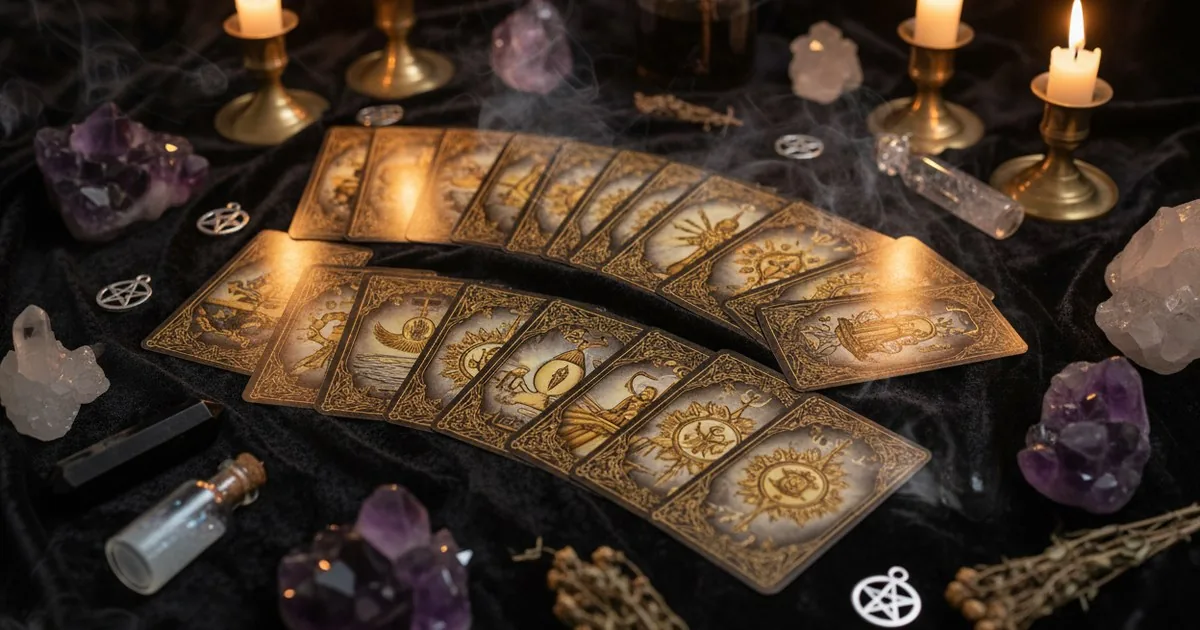
A practical step. Take a Tarot deck, select the Major Arcana, and lay them out in front of you. Do not rush to read the meanings — just look at the cards. Which images draw your eye? Which evoke emotions? Write down your first impressions. Then compare them with traditional interpretations. Most likely, you will discover a lot of new things about your inner state.
The Fool's Journey: How the Major Arcana Tell a Story
The Major Arcana are often viewed as a path that the Fool — a character starting his journey from scratch — walks. This sequence, from 0 to XXI, symbolizes the stages of personal development. By understanding this path, we can determine where we are now and where we are heading.
The beginning of the path is the Fool (0) and the Magician (I): the energy of a start, potential, first steps. Then come cards that teach us to interact with the world: the High Priestess (II) — intuition, the Empress (III) — creativity, the Emperor (IV) — structure. The middle of the path is crises and choices: the Chariot (VII) — will, Strength (VIII) — inner power, the Hermit (IX) — the search for truth. Then comes transformation: Death (XIII) — endings, the Devil (XV) — temptation, the Tower (XVI) — the destruction of illusions. And finally — rebirth: the Star (XVII), the Moon (XVIII), the Sun (XIX), Judgement (XX), and the World (XXI).
This sequence is not accidental. It reflects universal laws of development: to arrive at wholeness, one must pass through chaos and awareness. When we work with the Major Arcana, we can see which themes are relevant right now. For example, if the Hermit often appears in a spread, perhaps it is time to withdraw and sort things out within yourself. And if the Wheel of Fortune (X) comes up — expect changes, and it is important to be flexible.
A practical step. Create your own "path map": draw three Major Arcana — one symbolizes the past, the second the present, the third the future. Think about how these energies have manifested in your life. Write down your conclusions in a journal.
Key Arcana for Self-Discovery
Some Major Arcana are especially useful for working on yourself. Let us examine them in more detail.
The Fool (0): The Beginning of the Path
The Fool is a blank slate, readiness for adventure. He does not know what lies ahead, but trusts the world. In life, the Fool manifests when we start something new: a move, a job change, a relationship. This is the energy of enthusiasm, but also of naivety. The Fool's advice: do not be afraid to take the first step, but remember preparation.
The Magician (I): The Power of Intention
The Magician is a master who uses all his resources to achieve a goal. On the card, he holds in his hands a wand, a cup, a sword, and a pentacle — symbols of all the elements. The Magician reminds us that we have everything we need to manifest what we have envisioned. The main thing is to focus and act.
The Empress (III): Creativity and Abundance
The Empress is the energy of creation. She is connected to nature, fertility, and care. If the Empress appears in a spread, it is a sign that more attention should be given to creativity, relationships, and self-care. Perhaps you are giving too much, and it is time to replenish your resources.
The Hermit (IX): The Search for Truth
The Hermit is a symbol of solitude and inner wisdom. He climbs a mountain with a lantern to find answers. When the Hermit comes up, it is a call to slow down, be alone with yourself, and listen to your intuition. Do not fear solitude — it can become a source of strength.
Death (XIII): Transformation
Death is one of the most frightening cards, but in reality it symbolizes the completion of one stage and the beginning of another. This is not physical death, but a metaphor for change: letting go of the old to make room for the new. If Death appears in a spread, think about what in your life needs to end: an old habit, toxic relationships, outdated beliefs.
Table: Symbol and Meaning
| Symbol / Image | Traditional Meaning | Manifestation in Life | What to Do |
|---|---|---|---|
| The Fool (0) | Beginning, spontaneity | New project, risk | Take the first step, trust |
| The Magician (I) | Will, mastery | Achieving a goal | Gather resources, act |
| The Empress (III) | Creativity, abundance | Care, creation | Devote time to creativity, yourself |
| The Hermit (IX) | Wisdom, solitude | Search for answers | Be alone, meditate |
| Death (XIII) | Transformation | Endings, changes | Let go of the old, accept the new |
The Major Arcana in Relationships: Compatibility and Lessons
We often turn to Tarot to understand relationships with other people. The Major Arcana can show what lessons we are learning in a partnership, what energies we attract.
For example, the Lovers (VI) is not only romantic love, but also choice, a moral dilemma. If this card appears in a relationship spread, perhaps you face an important decision that will determine the future. The Emperor (IV) is stability, but also control. If there is an imbalance of power in a couple, this card will point to the need for balance.
The Hierophant (V) is traditions, marriage, spiritual mentorship. It may mean that the relationship is developing according to a traditional scenario, or that your partner is a teacher for you. The Devil (XV), on the other hand, warns of dependencies and passions that can be destructive. It is important to recognize what in a relationship is healthy attachment and what is codependency.
A practical step. Do a relationship spread: draw one card for yourself, one for your partner, and one for the relationship. Look at which Major Arcana came up. Think about what archetypes stand behind you and your partner. This will help you see the dynamic from the outside.
How to Interpret Reversed Cards
Many tarot readers use reversed cards to add depth. A reversed card may indicate blocked energy, inner resistance, or that the card's quality manifests in a shadow form.
For example, the reversed Empress may speak of problems with creativity, burnout, or difficulties in self-care. The reversed Hermit is isolation, fear of loneliness, unwillingness to look inward. The reversed Magician is manipulation, dishonesty, wasted energy.
However, not all tarot readers work with reversed cards, and that is fine. If you are a beginner, you can first master the upright meaning and later add reversed ones. The main thing is to remember that a card does not predict, but describes the energy of the moment.
Table: Myths About Reversed Cards
| Common Myth | Why This Is Not So | How It Really Is |
|---|---|---|
| A reversed card = bad | The card carries no negativity; it shows blocked energy | It is an invitation to figure out what hinders the manifestation of the quality |
| Reversed = opposite meaning | This is too simplistic | Usually it is the same archetype, but in shadow or in reverse |
| Without reversed cards, the reading is incomplete | Many masters work only with upright cards | Your approach is your choice; the main thing is intention |
Practice: The Daily Card of the Day
A simple way to tame the Major Arcana is to draw a card of the day. In the morning, ask the question: "What is important for me to understand today?" and draw one card. Throughout the day, observe how its energy manifests in events and your reactions. In the evening, write down your conclusions.
For example, if the Star (XVII) comes up, it may mean hope, inspiration, faith in the better. Pay attention to moments when you feel optimism. If the Tower (XVI) comes up, be ready for unexpected changes that may destroy the usual order. Instead of fear, perceive it as purification.
The card of the day is not a prediction, but a focus of attention. It helps you tune into a certain wave and notice what usually slips away.
Try practicing the card of the day for a month. You will be surprised at how much deeper you will understand the Arcana and yourself.
From Scattered Symbols to a Holistic View: Tarot as the Art of Living Consciously
When we begin to study the Major Arcana, it is easy to get carried away with collecting card meanings, memorizing symbols, and trying to predict the future. But truly deep understanding comes when we stop perceiving tarot as a predictive tool and begin to see it as a mirror reflecting our inner processes. The Major Arcana are not a verdict or a magical way to change reality at the snap of a finger. They are a language through which our subconscious speaks to us about what is already happening within, and about what choices are opening before us.
In this sense, tarot becomes not an escape from reality, but on the contrary — a way to return to it with greater clarity. When you draw a card and reflect on how its energy manifests in your life, you train mindfulness, learn to notice patterns, and take responsibility for your decisions. The Fool, the Magician, the Empress, the Hermit, Death — all these archetypes live in each of us. The question is not which card "came up," but which aspect of your personality it illuminates at the given moment.
Many fear tarot, thinking it imposes fate. But in reality, it offers freedom — the freedom to see a situation from different angles, choose a reaction, and ultimately change it. That is why we at EXETERIC media approach esotericism with respect and practical benefit. We do not promise instant miracles, but offer tools for self-discovery: from tarot cards to astrology and other practices that help bring order to the mind and feel grounded.
If you feel ready to understand yourself more deeply, do not stop at this article. Check out other practices in the EXETERIC blog — there you will find materials on meditation, working with energies, the symbolism of runes, and much more. And if you want to understand how the stars influence your character and life scenarios, look into the astrology section — perhaps your zodiac sign will hint at which practice suits you best.
The main thing is not to fear the unknown. Esotericism is not a dark forest, but a garden where everyone can find something of their own. Approach the cards with an open heart and a clear mind, try the practice consciously, with respect for tradition and for yourself. Then tarot will become not a source of anxiety, but a faithful helper on the path to wholeness. And remember: a card is always a hint, and the choice always remains yours.
Frequently Asked Questions
Why are the Major Arcana considered more important than the Minor Arcana?
The Major Arcana describe key life themes and stages of personal development, while the Minor Arcana concern everyday situations and emotions. The Major Arcana are archetypal images that appeal to universal human experiences: birth, love, crisis, transformation. They show deep processes that influence our lives at the level of fate or important choices. Therefore, when analyzing a spread, the Major Arcana often set the main theme, while the Minor Arcana detail it in the context of specific events.
How to correctly interpret reversed cards in tarot?
A reversed card does not mean something negative or opposite to the upright meaning. It is rather an indication that the energy of the arcana is blocked, manifests in a shadow form, or is in the process of transformation. For example, the reversed Empress may speak of burnout or suppressed creativity, and the reversed Hermit — of fear of loneliness and unwillingness to look inward. If you are a beginner, you can start working only with upright cards and later add reversed ones to deepen understanding. The main thing is to remember that a card reflects the energy of the moment, not a fatal prediction.
Can tarot be used to make important decisions?
Tarot can become a useful tool for reflection and conscious choice, but it does not replace logical analysis and responsibility. When you ask a question and draw a card, it hints at which aspects of the situation deserve attention, what hidden factors may influence the choice. For example, if the Lovers comes up, it may indicate the need to make a decision based on values rather than emotions. Tarot helps to see a situation from different sides, but the final decision always remains yours. Use the cards as an advisor, not a judge.
Which Major Arcana are best for beginners?
For beginners, it is best to start with arcana that are easy to relate to everyday experience. These are the Fool (0), the Magician (I), the Empress (III), the Emperor (IV), and the Lovers (VI). They describe basic life themes: the beginning of a path, the manifestation of will, creativity, structure, and choice. Later, you can add more complex arcana, such as the Hermit (IX), Death (XIII), or the Tower (XVI), which speak of crises and transformations. The main thing is not to memorize meanings by heart, but to reflect on how the card resonates with your life. Start with the card of the day to gradually get used to the symbolism and develop intuition.